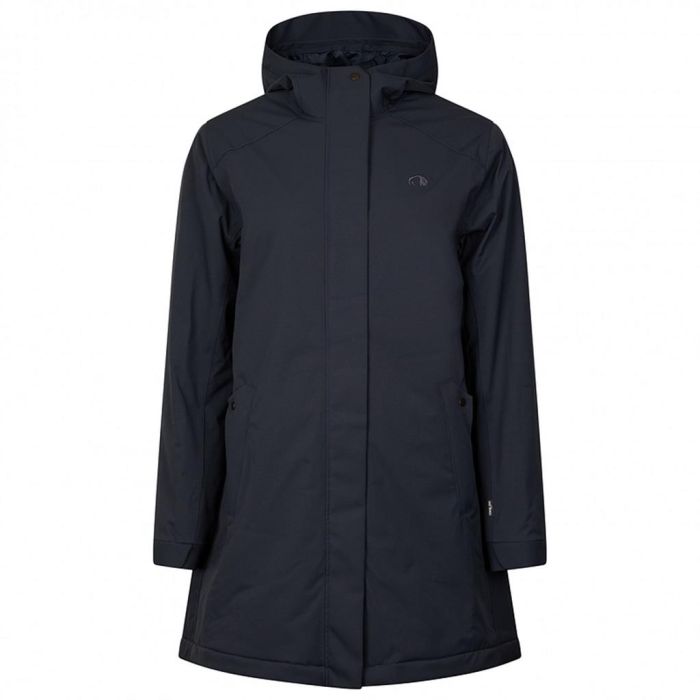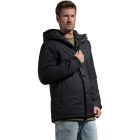

Whether it's a walk with the dog, a mountain hike or a city stroll, with the Stir Womens Hooded Coat from Tatonka you are independent of the weather. The feminine cut weather protection coat consists of an outer layer of T-Hardshell Recycled 2L with membrane and an inner layer of Lavalan® insulation. The coat also features a PFC-free DWR finish, so you're safe from the cold and wet. Even the double-sided adjustable hood with reinforced brim is padded for a comfortable, cosy feeling. The softly lined front pockets with hidden zipper take care of important utensils, but also cold hands. With the Stir Womens Hooded Coat, you can go out the door with peace of mind!
Material / Details
- Material: T-Hardshell Recycled 2L, 100 % Polyester (recycled)
- Material membrane: 100 % polyester (75 % recycled)
- Material Filling: Lavalan®, 82 % wool, 18 % polyactide (maize starch)
- Virgin wool
- Material lining: 100 % polyester (37 % recycled)
- Green Label
- PFC-free DWR equipment
- Water repellent
- Breathable
- Durable
- Heat insulating lavalan® wool padding
- 2-way adjustable, padded hood with reinforced brim
- Soft chin guard
- Hidden 2-way front zip
- Front placket with visible and concealed press studs
- Adjustable, elastic hem
- Decorative sleeve hem with hidden knitted cuff
- 2 front pockets with concealed zip, softly lined
T-Hardshell Recycled 2L
The soft, 2-layered recycled material has a PFC-free water- and stain-resistant gear. The material is used for weather-protective jackets and coats.
Lavalan
Lavalan consists of 80% pure new wool and 20% maize starch and is a high-quality filling fleece. The combination of these materials makes it dimensionally stable, breathable, temperature equalising and washable. Wool fibres that are too short for spinning are used here.
GREEN by Tatonka
For products with the GREEN label, both recycled materials (e.g. recycled polyester) and materials from renewable, biodegradable and recyclable raw materials (e.g. wool, organic cotton, etc.) are used. The selection of future materials is adapted to the state of the art and wherever there are sensible alternatives to existing crude oil-based materials, these are replaced by bio-based materials.